A changing surface
Copper can develop a patina over time. The appearance depends on handling, exposure and the finish of the particular object.
From a simple sheet to a considered object. Follow the forms, tools and small decisions that bring copperware to life.
Explore the process
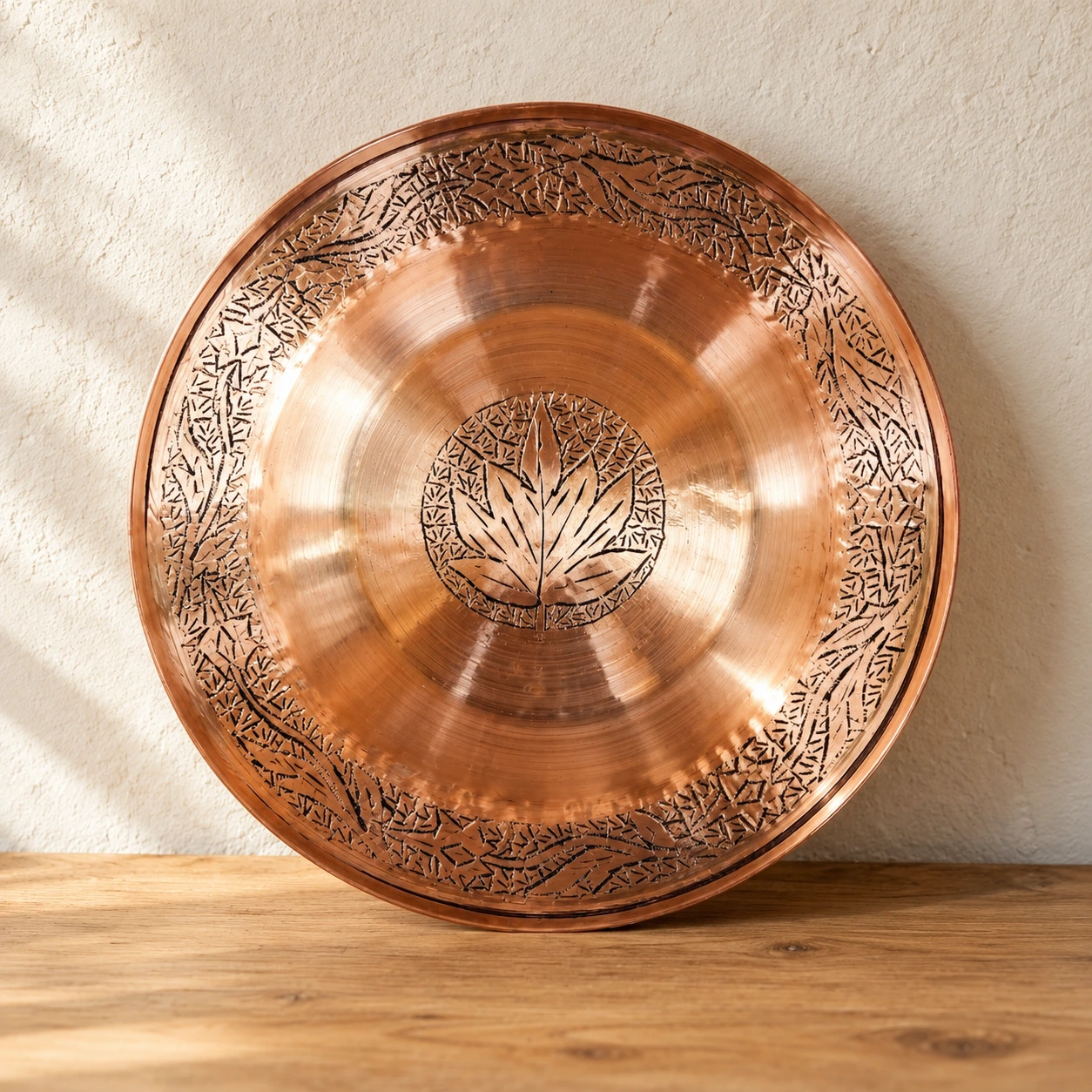
A closer look at the language of hand-worked copper.
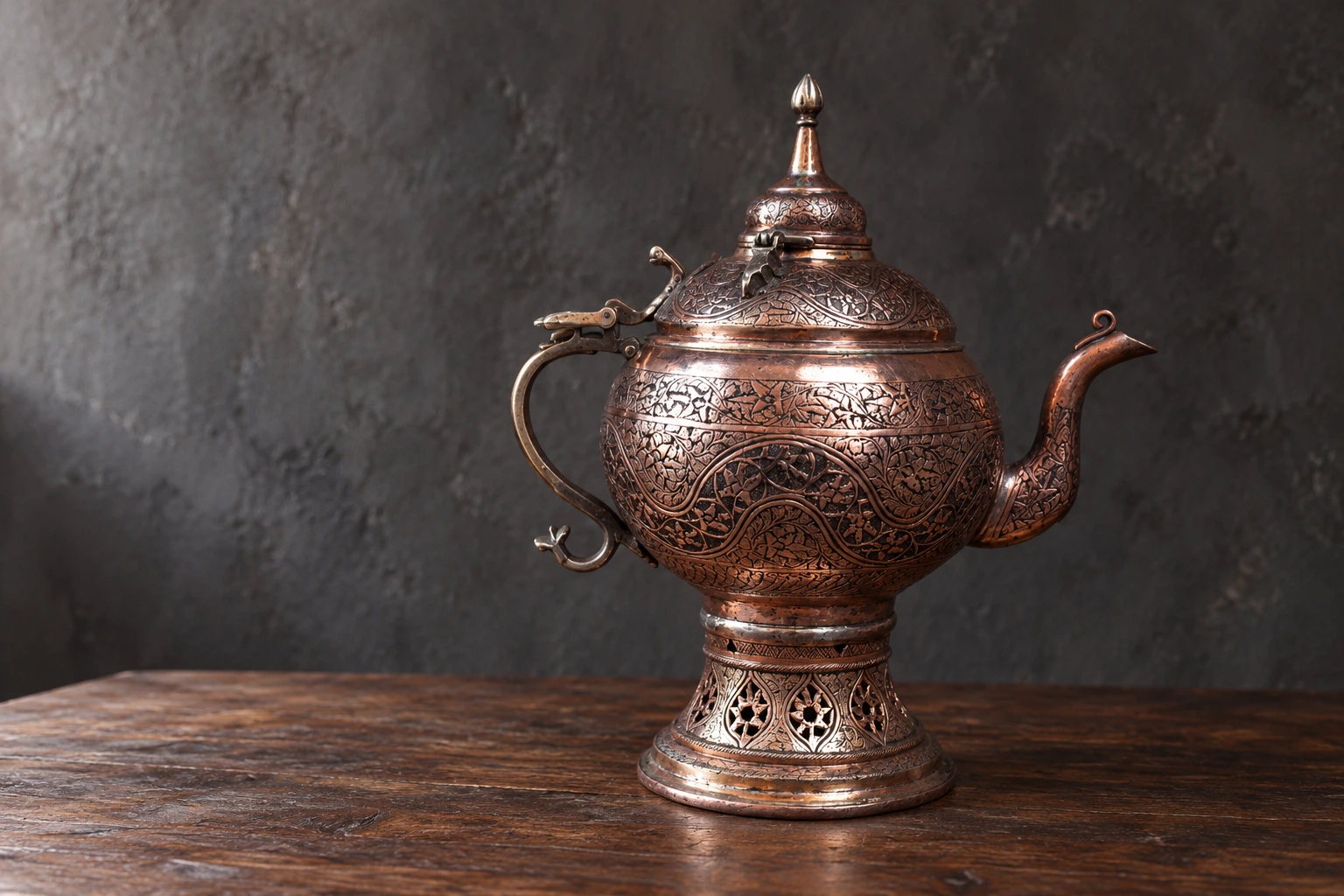
Copper has a distinctive warmth, but it is the way a piece is formed and finished that gives it an individual presence. A rounded body, a narrow neck or a carefully worked rim changes how the object catches the light.
Our collection invites a closer look at this relationship between material and maker. The process varies with the object: a vessel, a tray and a decorative piece each ask for different forms of attention.
The exact method depends on the piece. These chapters introduce the main ideas behind shaping, surface work and finishing.
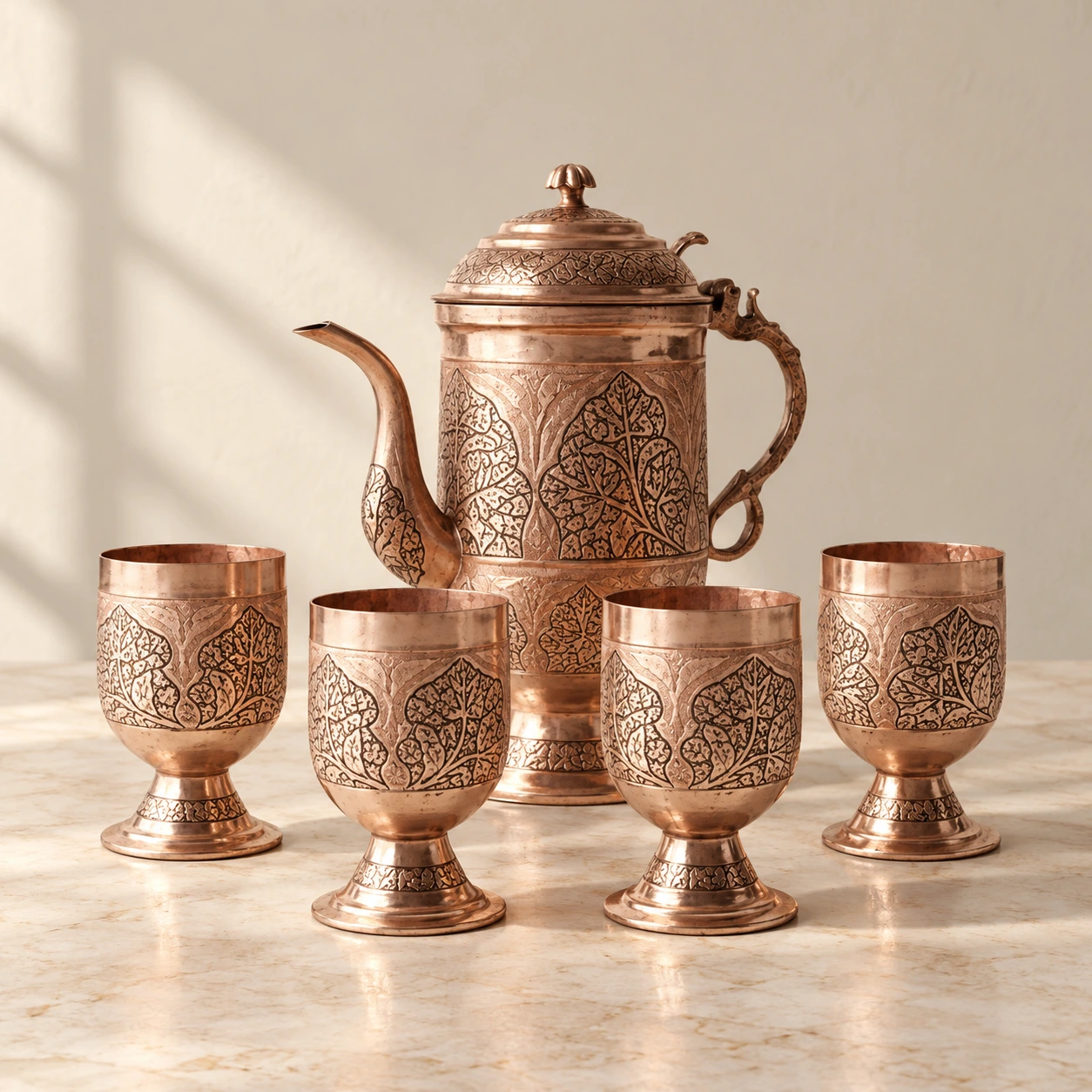
The object begins with its intended shape and purpose. Proportion, depth and balance guide the work, whether the final piece is a rounded vessel or a broad serving surface.
Hammering and other surface work create texture and help refine the form. The spacing and rhythm of marks can change how the metal reflects the light.
Where a design calls for decoration, the pattern is worked into the surface with care. Plain and patterned areas bring contrast, drawing attention to a curve, rim or central motif.
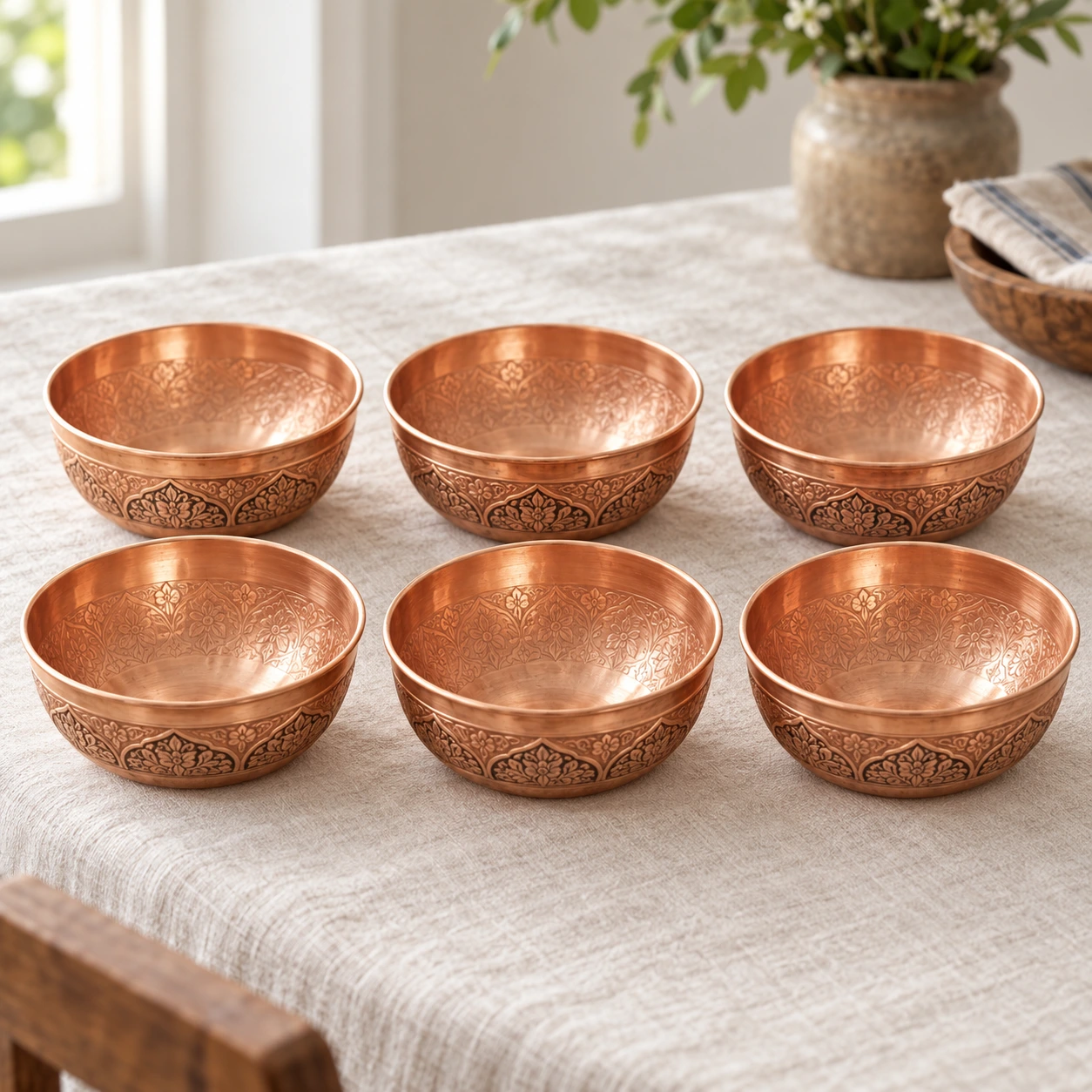
Finishing brings the surface to its intended appearance. Before choosing a piece, read its material, finish and care notes; decorative and food-contact items may have different requirements.
Copper can develop a patina over time. The appearance depends on handling, exposure and the finish of the particular object.
Hand-worked texture can show small variations. Compare photographs and product details when selecting a finish.
Always check the stated intended use, any lining and the supplied care guidance. A decorative object should be treated as a decorative object.
A decorative surface can bring rhythm to a simple form.
The outline is part of the object’s character.
A worked surface changes with the light around it.
Start with the instructions supplied for your particular piece. Check its finish, lining and intended use before selecting a cleaning method.
Where washing is suitable for the item, use a soft cloth and mild soap, then dry it thoroughly. Avoid abrasive pads and harsh cleaners unless the maker specifically recommends them.
A change in colour may be part of copper’s natural surface development. Ask about the finish before polishing so that you do not remove a treatment intended to remain.
Share the product name or a photograph using the contact details. Ask about the exact material, lining, finish and care requirements of that item.
Explore the collection with a closer understanding of the material and the making.
Explore the collection